The Mountain Beyond the Mountains
It is the story of how I moved beyond NOLS and discovered something profound!
Rohit Patkar
Prelude
NOLS—the National Outdoor Leadership School—is regarded by many as the most prestigious outdoor leadership institution in the world. It exists in a league of its own (beyond even Ivy league) – no one can touch it – not even Outward Bound (who is the founder of Outdoor Experiential Education itself).
Founded in 1965 and headquartered in Lander, Wyoming, USA.
For generations, it has trained wilderness guides, expedition leaders, mountaineers, outdoor educators, even the American army. Within the world of outdoor leadership, becoming a NOLS instructor is often considered one of the highest professional achievements possible.
There was a time when I wanted exactly that.
In fact, there was a time when I considered it one of the central ambitions of my life.
I studied NOLS obsessively. I corresponded with its leadership. I attended its courses . I spent enormous sums of money participating in its expeditions. I imagined a future for myself within that world.
A highly respected veteran NOLS instructor from Canada, who trained instructors himself, explicitly told me that I should become a NOLS instructor and offered to recommend me.
Yet, I never became one.
Why?
Because reality is more intriguing!
The deeper I entered the world of institutionalised mountaineering, outdoor leadership, and experiential education, the less convinced I became by it.
What began as admiration slowly evolved into disappointment.
What began as fascination gradually transformed into scepticism.
What once appeared profound increasingly appeared superficial.
And eventually I came to regard much of the field as a sophisticated illusion.
Not necessarily malicious.
Not necessarily dishonest.
But nevertheless an illusion.
In the Vedic tradition there is a concept known as Maya.
Maya is often translated as illusion, but the translation is inadequate.
Maya in Sanskrit means “ That Which Is Not”.
To become captivated by symbols while overlooking substance.
To become enchanted by institutions, credentials, brands, titles, prestige, systems, and narratives while losing sight of the thing itself.
Looking back, I can see that my journey through mountaineering and outdoor education was also a journey through Maya.
The myth of adventure.
The myth of leadership.
The myth of expertise.
The myth of institutions.
The myth of becoming.
For years I believed that fulfilment and wisdom lay somewhere within those worlds.
Eventually I came to a very different conclusion.
This chapter is the story of how that happened.
It is the story of how a young corporate employee became obsessed with the Himalayas, became a professional mountain guide, dreamed of becoming a NOLS instructor, and then abandoned that dream altogether after discovering what appeared to me to be a far deeper understanding of human development, consciousness, and life itself.
It is the story of how I moved beyond NOLS.
Part I: The Dream
Long before I became a mountain guide, long before I arrived in Ladakh, and long before I encountered Transcendental Meditation or the Vedic tradition, I was sitting in an office wondering what the hell I was doing with my life.
On paper, everything looked fine.
I had a respectable corporate job. I was earning money. My future appeared predictable. Had someone examined my life from the outside, they might have concluded that I was progressing normally through the expected stages of adulthood.
Yet inwardly, something felt profoundly wrong.
I could not imagine spending the next thirty or forty years of my life sitting in offices, attending meetings, and slowly climbing a corporate hierarchy whose rewards seemed increasingly meaningless to me.
The problem was not the company.
The problem was not my colleagues.
The problem was much deeper.
I wanted a different life.
Not a better life in the conventional sense.
A different one.
I wanted movement.
I wanted uncertainty.
I wanted wild places.
I wanted forests, rivers, deserts, mountains, oceans, distant countries, remote places, snow, ice and open skies.
Most of all, I wanted to live in nature, explore the Outdoors.
By 2009, although I remained employed, I had already made the decision internally. I was going to leave.
The decision itself was surprisingly easy.
The difficult question was what would come afterwards.
Today, a person can ask ChatGPT almost anything and receive an answer within seconds.
Back then, things were different.
I did not even own an internet connection or a smart phone (by choice).
Much of my research was conducted in a cyber café.
Even now, I can remember sitting in that cramped room, surrounded by humming computers and flickering screens, searching for answers to questions that most people can never imagine.
How does one become an explorer?
How does one become a professional adventurer?
How does one build an entire life around travel and nature?
How does one become a nomad?
Google God offered surprisingly little guidance.
I wrote emails to famous international photographers.
I researched travel writing, travel journalism.
At one point I even considered whether I could somehow join National Geographic.
The problem was that none of these possibilities felt concrete.
I was not searching for a profession.
I was searching for a way of being.
A life.
One afternoon, while wandering through this digital wilderness of half-formed possibilities, I discovered the website of the Nehru Institute of Mountaineering (NIM) in Uttarkashi.
As I read through the website, tears began flowing from my eyes.
The reaction surprised me.
I was not reading about mountaineering techniques.
I was not reading about equipment.
What moved me was the way they spoke about the Himalayas.
The writing conveyed something I had rarely encountered before.
The Himalayas were presented not merely as mountains but as a living world.
A place capable of transforming human beings.
A place where life became simpler, harsher, and more authentic.
A place where one could shed the noise of modern civilisation and encounter something more fundamental.
I sat there in that internet café staring at the screen while tears rolled down my face.
At the time I could not explain why.
Looking back, I think some forgotten part of me recognised a doorway.
The mountains were calling long before I ever set foot in them.
A few days later, while continuing my research, I stumbled upon another organisation.
NOLS.
The National Outdoor Leadership School.
If the NIM website had touched something emotional within me, NOLS appealed to something intellectual.
The organisation immediately struck me as extraordinarily professional.
Their website was comprehensive.
Their philosophy appeared thoughtful.
Their educational model seemed sophisticated.
Unlike many outdoor organisations, NOLS was not merely teaching people how to climb mountains or carry backpacks.
They were attempting to cultivate judgment.
Leadership.
Communication.
Risk management.
Decision-making.
Responsibility.
Tolerance to adversity and uncertainty.
The wilderness, in their view, was not the destination.
It was the classroom.
I was captivated.
Within a remarkably short period of time, I convinced myself that I wanted to become a NOLS instructor.
The fact that I had never attended a NOLS course was apparently irrelevant.
The fact that I knew almost nothing about the profession was equally irrelevant.
The dream had already taken hold.
Soon afterwards, I began corresponding with Ravi Kumar, who was then the director of NOLS India, and still is (June 2026).
Patiently and generously, he answered my endless questions.
How does one become a professional mountaineer?
How does one earn a living in the outdoors?
How does one transition from corporate life into a life of adventure?
Looking back, I must have sounded like a man attempting to dismantle one identity and construct another from scratch.
Because that was exactly what I was doing.
At some point during our correspondence, Ravi offered me something extraordinary.
A ninety-percent scholarship to attend a forty-day NOLS Himalaya Glacier Mountaineering expedition.
Even today, I recognise how generous that offer was.
At roughly the same time, Ravi introduced me to a NOLS instructor living in my hometown.
His name was Shantanu.
Naturally, I sought his advice.
I explained my plans.
I explained my ambitions.
And I asked a simple question.
Should I attend the NOLS mountaineering course?
His answer was immediate.
No.
He believed I was not ready.
In his view, I lacked sufficient outdoor experience.
I disagreed.
Like many Indians, I had one foot in the modern world and another in my village.
A significant portion of my childhood had unfolded outdoors.
Not in organised outdoor recreation.
Not in formal adventure programs.
Simply outdoors.
In forests.
In fields.
In rivers.
On trees.
Walking long distances through the countryside.
Exploring.
Climbing.
Wandering.
Occasionally accompanying relatives on hunting trips.
Nature was not something exotic that I visited during weekends.
It was woven into my upbringing.
Nevertheless, I trusted his judgment.
Instead of accepting the NOLS scholarship, I enrolled in the Basic Mountaineering Course at the Nehru Institute of Mountaineering.
Looking back, that decision altered the trajectory of my life.
The first week of the course focused primarily on rock climbing.
I performed exceptionally well.
Participants were organised into rope groups, small teams of roughly five or six people.
Within my rope group, I was one of the strongest performers.
There was never any question about my physical capability.
There was never any question about my commitment.
The problems began later.
Once we moved higher into the mountains.
Once we entered the glacier environment.
What I witnessed disturbed me.
The safety standards struck me as alarmingly sketchy.
Even as a relatively inexperienced participant, I found myself repeatedly questioning what I was seeing.
Certain practices appeared unnecessarily risky.
Certain decisions appeared careless.
I remember thinking, more than once, that sooner or later somebody was going to get seriously hurt and die.
What troubled me even more was the condition of the camp itself.
The reality on the ground bore little resemblance to the lofty language that had moved me so deeply on the website.
One side of the mountain had effectively become an open toilet.
A hundred participants were using the area.
People suffered from diarrhoea.
Human waste accumulated everywhere.
There was little evidence of proper sanitation practices.
No meaningful Leave No Trace ethic.
No culture of digging catholes.
No apparent concern for the impact on the environment.
The place was becoming filthy.
I found it deeply disturbing. And I puked many times.
The contradiction was impossible to ignore.
The website spoke poetically about the Himalayas.
The reality was a mountain camp increasingly overwhelmed by human waste.
The institution spoke of mountain ethics.
The practices on the ground often appeared to contradict those ideals.
The longer I remained, the more uncomfortable I became.
Eventually, after two weeks, I made my decision.
I left.
Not because I was tired.
Not because I was homesick.
Not because the course was physically demanding.
I left because I no longer trusted what I was seeing.
When I returned home, Shantanu was furious.
His reaction suggested that he believed I had simply quit.
That I was another city boy who had romanticised the mountains and then retreated when reality became uncomfortable.
Nothing could have been further from the truth.
I had not left because I feared the mountains.
I had left because I feared the consequences of poor judgment within them.
At the time, however, there was no way to prove that distinction.
To many people, quitting is quitting.
The reasons do not matter.
Years later, a tragic accident during another NIM mountaineering course would result in multiple fatalities among both students and instructors.
Some of those instructors were highly experienced mountaineers, including climbers who had summited Everest several times.
When I heard the news, my thoughts returned immediately to that glacier.
To the concerns I had felt.
To the discomfort that had eventually driven me to leave.
I did not experience satisfaction.
Only sadness.
The mountains are unforgiving teachers.
And they do not care about reputation.
They do not care about institutions.
They do not care about credentials.
The mountain recognises only reality.
At the time, however, I knew none of this.
I was still chasing a dream.
The dream of a life in the mountains.
The dream of becoming an adventurer.
The dream of becoming a NOLS instructor.
I had no idea that the journey ahead would gradually dismantle every one of those ambitions and replace them with questions far larger than the ones that had first brought me into the mountains.
The real expedition had not yet begun.
Part II: The Illusion
By the time I arrived in Ladakh in 2011, the dream was no longer theoretical.
I was no longer sitting in an internet café imagining a different life.
I was living it.
The transition from corporate employee to mountain guide had happened far more quickly than I had expected. Within a relatively short period, I found myself working in the high mountains of Ladakh as a trekking and climbing guide.
The irony was not lost on me.
A year earlier, I had been told that I was not ready for a NOLS mountaineering expedition because of my supposed lack of outdoor experience.
Now I was earning my living in the mountains.
Life has a peculiar habit of ignoring other people's timelines.
Ladakh became my classroom.
Not because somebody designed a curriculum for me.
Not because I attended lectures.
Not because I received certificates.
The mountains themselves became the teacher.
Weather became the teacher.
Altitude became the teacher.
Responsibility became the teacher.
Clients became the teacher.
Failure became the teacher.
The mountains stripped away theory with remarkable efficiency.
What remained was reality.
And reality is always simpler and more brutal than ideology.
Yet despite my growing experience, my fascination with NOLS remained intact.
The dream was still alive.
If anything, it had become stronger.
In the autumn of 2012, I finally attended my first NOLS course: Trip Leader India.
The course was designed primarily for participants from the Indian subcontinent and focused on expedition leadership, backpacking, navigation, risk management, communication, group dynamics, cooking, teaching, and decision-making.
Compared with many traditional mountaineering programs, it felt refreshingly modern.
The emphasis was not merely on technical competence.
It was on human beings.
How groups function.
How leaders emerge.
How decisions are made.
How mistakes occur.
How conflicts are managed.
How people learn.
One component of the course required participants to teach a class.
I chose to teach Leave No Trace.
The subject was close to my heart.
Perhaps partly because of what I had witnessed at NIM two years earlier.
Perhaps because I had already begun to appreciate how fragile mountain environments really are.
The instructional team was international.
There were instructors from India, Canada, and Chile.
The course leader was Roger Yim, a Canadian instructor with approximately fourteen years of experience at NOLS in 2012. More importantly, he was involved in training instructors themselves.
This was not somebody casually offering encouragement.
This was somebody whose professional judgment carried weight.
I began teaching my class.
Within minutes, something happened that would remain with me for years.
Roger recognised potential in me.
Afterwards, during the feedback session, he told me that I should become a NOLS instructor.
He even offered to recommend me.
I remember feeling stunned.
For years I had studied the instructor requirements published by NOLS.
Those requirements appeared intimidating to the point of absurdity.
Reading them felt like reading the biography of an outdoor superhero.
The amount of experience expected seemed enormous.
The standards appeared almost unattainable.
Yet here was a senior instructor telling me that I was already capable of entering that world.
The experience created a strange psychological conflict. In literature they call this cognitive dissonance.
For years I had trusted the institution more than myself.
Now somebody from within the institution was telling me a completely different story.
The gap between appearance and reality appeared once again.
The requirements on paper suggested one thing.
The judgment of an experienced instructor suggested another.
Looking back, that moment may have been more important than I realised at the time.
Because it planted a seed of doubt.
Not doubt about myself.
Doubt about systems.
Doubt about institutions.
Doubt about the stories organisations tell about themselves.
The deadline for the NOLS instructor course was the 1st of December.
The Trip Leader India course ended only weeks earlier.
By the time I fully processed Roger's recommendation and seriously considered applying, the deadline had passed.
At the time, this felt unfortunate.
Later, I would see it differently.
Sometimes life closes a door before we realise we no longer wish to walk through it.
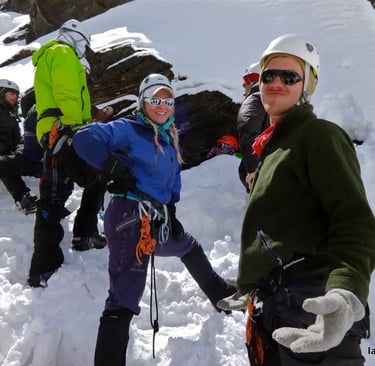
The following spring, in 2013, I attended the NOLS Himalaya Glacier Mountaineering Expedition.
The commitment was enormous.
Financially, it was one of the biggest investments I had ever made in myself.
The expedition cost approximately eight thousand US dollars.
Even after receiving financial assistance, it consumed virtually all the savings I had accumulated during my corporate years.
Years of work.
Years of saving.
Years of financial security.
Gone.
I paid willingly.
At the time, I believed I was investing in my future.
I still imagined that becoming a NOLS instructor might one day be possible.
I arrived with extraordinarily high expectations.
In retrospect, perhaps impossibly high expectations.
I had spent years building an image of NOLS in my mind.
An image of excellence.
An image of competence.
An image of leadership.
An image of extraordinary professionalism.
Reality, once again, had other plans.
The weather was severe.
Long periods of difficult mountain conditions disrupted the expedition.
Weather itself was not the problem.
Mountains have weather.
That is part of the bargain.
What surprised me was something else.
Many of the participants, all of whom were from USA, appeared remarkably inexperienced.
Some seemed largely unprepared for the seriousness of the environment.
Several had very little outdoor background.
This puzzled me.
I found myself wondering how people with such limited experience had arrived on a course that I had regarded as elite.
Then came the critical moment.
The original plan was ambitious.
We were supposed to cross two major Himalayan high passes and eventually descend into the Munsiyari region.
That objective represented the heart of the expedition.
After prolonged weather difficulties, the instructors proposed a solution.
The group would split.
Participants who were capable and willing to continue would proceed with two instructors.
Those who preferred not to continue or were incapable, would descend with the remaining instructors.
The proposal seemed entirely reasonable.
For a moment, I felt excited.
The expedition might still achieve its original objective.
The stronger members of the group would continue.
The others would retreat.
Everyone would have a choice.
The next morning, the decision was reversed by the instructors, who are supposed to be demigods.
Nobody would continue.
The entire group would descend.
The expedition was over.
We returned to base camp near the Pindari Glacier.
The two passes remained uncrossed.
Munsiyari remained unseen.
Years later, I still remember the disappointment.
Not because we failed to complete the objective.
Mountains owe us nothing.
Weather owes us nothing.
Success is never guaranteed.
My disappointment ran deeper.
Something else was collapsing.
For years I had carried an idealised image of NOLS.
An image constructed from websites, stories, videos, reputation, and imagination.
That image was beginning to fracture.
I began noticing contradictions everywhere.
The official requirements suggested one reality.
Actual experience suggested another.
The mythology suggested one reality.
The lived experience suggested another.
The branding suggested one reality.
The mountains suggested another.
This was not merely about NOLS.
It was about something larger.
Something I would spend years trying to understand.
I began watching recordings of NOLS instructor summits and leadership conferences.
Back then many of these videos were publicly available online.
One discussion in particular stayed with me.
Highly experienced instructors openly admitted that NOLS had not arrived and never would arrive.
Another discussion revolved around a surprisingly fundamental question.
Do we even teach leadership?
The question fascinated me.
An institution dedicated to leadership education was openly questioning whether leadership itself was taught by them.
Part of me admired the honesty.
Another part began asking a different question.
If the experts themselves were uncertain about these things, then what exactly was everybody selling?
The deeper I looked into outdoor leadership education and experiential education, the less convinced I became.
The field appeared filled with grand language.
Transformation.
Leadership.
Growth.
Empowerment.
Character development.
The rhetoric was impressive.
The evidence felt less impressive.
Increasingly, I found myself asking whether much of the field consisted of people constructing elaborate narratives around experiences whose actual effects were far less certain.
Perhaps I was becoming cynical.
Perhaps I was simply becoming honest.
Either way, the spell was breaking.
The mythology that had captivated me in internet cafés years earlier was losing its power.
The institution remained.
The logos remained.
The certifications remained.
The language remained.
But something essential had disappeared.
Belief.
The dream of becoming a NOLS instructor began fading.
Not all at once.
Not dramatically.
It simply started losing its emotional charge.
For years I had imagined that becoming a NOLS instructor represented a summit.
Now I was no longer certain there was a summit there at all.
What I saw increasingly resembled another human system.
Another institution.
Another framework attempting to explain reality while remaining trapped within its own limitations.
The dream was dying.
Although I did not yet realise it, something else was already waiting to replace it.
And it would arrive from a direction I had never expected.
Part III: Beyond the Summit
By 2015, I had spent years chasing mountains.
I had left corporate life.
I had become a professional guide.
I had worked in Ladakh.
I had climbed, trekked, taught, suffered, endured storms, crossed glaciers, led groups, and immersed myself in the world I had once dreamed about while sitting in internet cafés and corporate cubicles.
From the outside, it appeared that I had succeeded.
I had achieved precisely what I had set out to do.
Yet inwardly, something remained unresolved.
The excitement was still there.
The beauty was still there.
The mountains were still there.
But the sense that I was moving toward some ultimate destination had vanished.
The deeper I entered the world of mountaineering and outdoor education, the more I felt that something essential was missing.
I could not have articulated it clearly at the time.
I only knew that the questions which interested me most were no longer questions about mountains.
The questions had become more fundamental.
Why do human beings suffer?
Why do intelligent people repeatedly make foolish decisions?
Why do some people seem naturally creative while others struggle?
What determines happiness?
What determines perception?
What determines the quality of human life itself?
Outdoor education seemed preoccupied with behaviour.
Leadership.
Communication.
Decision-making.
Teamwork.
Conflict resolution.
Risk management.
All useful things.
All worthwhile things.
But increasingly they felt like branches.
I wanted to understand the root.
Then, in 2015, I travelled to an ashram in Uttarakhand as a volunteer (WooFing).
At the time, I regarded it as a temporary detour.
I had no idea that it would ultimately alter the direction of my life far more profoundly than any mountain expedition ever had.
It was there that I learned Transcendental Meditation (TM), albeit unwillingly.
That experience became the doorway through which an entirely different world entered my life.
Soon I was encountering ideas and systems of knowledge that were completely absent from the world of outdoor leadership education.
Ayurveda.
Jyotish.
Vastu.
Gandharva Veda.
Vedic chanting.
Ancient systems that claimed to understand human life not merely at the level of behaviour, but at the level of consciousness itself.
At first, I approached these subjects with curiosity.
Then with fascination.
Then with astonishment.
What struck me was not merely the breadth of the knowledge.
It was the underlying framework.
Everything appeared connected.
Health was connected to consciousness.
Creativity was connected to consciousness.
Relationships were connected to consciousness.
Society was connected to consciousness.
Even conflict and war were connected to consciousness.
The fundamental proposition was startlingly simple.
Human beings do not suffer primarily because they lack skills.
They suffer because their awareness is not functioning at its full potential.
Develop consciousness and the rest follows naturally.
The implications were enormous.
For years I had watched outdoor educators attempt to cultivate leadership through wilderness experiences.
I had watched organisations attempt to cultivate judgment through challenge.
I had watched institutions attempt to improve communication through carefully designed programs.
Now I encountered a completely different proposition.
Improve consciousness itself.
Everything else improves automatically.
The more I reflected upon this, the more I began seeing outdoor leadership education in a different light.
What had once appeared profound now seemed strangely superficial.
Not because it was entirely wrong.
But because it appeared incomplete.
It was working on effects rather than causes.
Symptoms rather than origins.
Branches rather than roots.
I began to see the same pattern everywhere.
People attempting to solve problems without understanding the source from which the problems arise.
People attempting to improve behaviour without understanding consciousness.
People attempting to improve society without understanding the individual.
People attempting to transform outcomes without transforming the underlying field from which those outcomes emerge.
The Vedic tradition offered a word that increasingly resonated with my own experience.
Maya.
Maya is often translated as illusion.
But that translation barely scratches the surface.
Maya is not simply falsehood.
Maya is mistaken perception.
It is seeing something partially and imagining that one sees it completely.
It is confusing appearance with reality.
The more I reflected on my experiences in mountaineering and outdoor education, the more I felt that I had spent years wandering through various forms of Maya.
The mythology of adventure.
The mythology of leadership.
The mythology of institutions.
The mythology of expertise.
The mythology of certification.
The mythology of becoming.
Everywhere I looked, people seemed captivated by symbols.
Titles.
Credentials.
Brands.
Organisations.
Reputations.
The deeper question was rarely asked.
What is the state of consciousness of the person involved?
Two individuals may possess identical qualifications.
Yet one possesses clarity, wisdom, creativity, compassion, intuition, and good judgment, while the other does not.
What explains the difference?
The answer, according to the Vedic understanding, lies deeper than education.
Deeper than experience.
Deeper even than intellect.
It lies in consciousness itself.
Once I began seeing the world through this lens, I could not return to the way I had seen it before.
Suddenly many things made sense.
Why some highly qualified people seemed remarkably unwise.
Why some uneducated people possessed extraordinary wisdom.
Why institutions often appeared impressive yet produced mediocre results.
Why entire fields of knowledge seemed trapped within their own assumptions.
Even my own journey began to make sense.
For years I had imagined that I was searching for a profession.
Then I believed I was searching for adventure.
Then I believed I was searching for mountains.
In reality, I had been searching for understanding.
The mountains had simply been one stage of that search.
An important stage.
A beautiful stage.
But only a stage.
The dream of becoming a NOLS instructor did not end because I failed.
It ended because the dream itself became too small.
What once appeared to be a summit eventually revealed itself to be merely another viewpoint along the trail.
The irony is that NOLS had helped bring me to that realization.
The organisation that I once regarded as the destination had ultimately become part of the journey.
Not the end.
Not the answer.
Not the summit.
Just another ridge on a much larger mountain.
And the mountain that now interested me could not be climbed with ropes, crampons, or ice axes.
Its terrain was consciousness.
Its challenges were invisible.
Its rewards could not be photographed.
Its summit could not be measured.
No certificate could be issued for reaching it.
No institution could claim ownership of it.
No organisation could confer mastery over it.
The journey was inward.
And unlike every mountain I had ever climbed, there was no final summit.
Only increasing depth.
Looking back now, I can see that the tears that flowed while reading about the Himalayas in that internet café were real.
The longing was real.
The search was real.
But I had misunderstood what was calling me.
I thought the Himalayas were calling.
I thought adventure was calling.
I thought mountaineering was calling.
I thought NOLS was calling.
What was actually calling was something much deeper.
A desire to understand life itself.
The mountains gave that search a direction.
The wilderness gave it form.
NOLS gave it language.
But eventually the search moved beyond all of them.
And that, more than anything else, is why I never became a NOLS instructor.
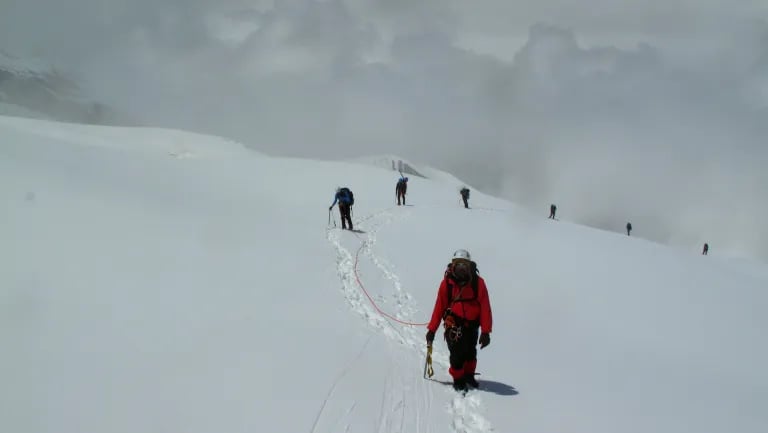
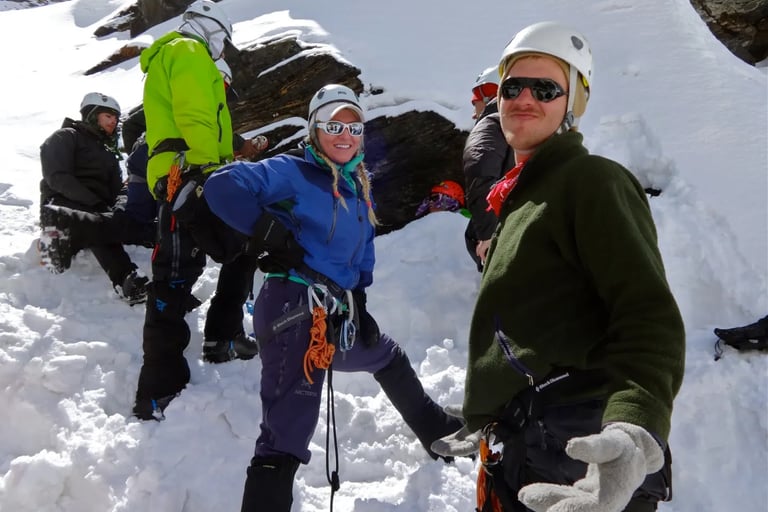
PS: Below are some memories of Glacier Mountaineering with NOLS in the Himalaya!
Disclaimer: Information on this website is provided for general purposes only and does not constitute medical advice. TM is not a substitute for professional medical care; individual results may vary.
© 2026 Rohit Patkar. All rights reserved.